Advancing Medical
Sciences Together
The peer-reviewed platform empowering undergraduate researchers, fostering critical scientific inquiry, and bridging the gap between clinical theory and academic publishing.
Official Journal & Institutional Ownership
Gomal Medical College
D.I. Khan, Khyber Pakhtunkhwa
GSJMS
Gomal Student Journal of Medical Sciences

Student Research Society
Gomal Medical College, D.I. Khan
Introduction
Welcome to the Gomal Student Journal of Medical Sciences (GSJMS), a premier, open-access academic platform dedicated to fostering early-career scientific inquiry. Conceived and driven entirely as an initiative by undergraduate students, GSJMS provides a rigorous yet accessible avenue for aspiring medical professionals to step into the world of academic publishing. Our mission is to cultivate a culture of evidence-based medicine and critical thinking early in medical training, empowering students to contribute meaningfully to the global medical literature while mastering the fundamentals of scientific communication.
Ownership Details
The Gomal Student Journal of Medical Sciences is proudly owned and published by Gomal Medical College in collaboration with the institution's Student Research Society. This strong institutional foundation ensures that the journal adheres to the highest ethical and academic standards while remaining deeply rooted in its student-led identity. The collaborative ownership structure reflects a commitment to supporting student-driven academic endeavors and providing sustainable infrastructure for undergraduate research initiatives.
Gomal Medical College
Provides administrative backing, institutional oversight, and ethical publishing governance.
Student Research Society (GMC)
Coordinates student peer review, manuscript solicitation, and scientific workshops.
Aims and Scope
GSJMS specifically focuses on highlighting and advancing the research of undergraduate students across all disciplines of medical and health sciences. The journal serves as a dedicated platform for early-career researchers to publish original articles, systematic reviews, case reports, and short communications. Our scope encompasses a broad spectrum of topics, including clinical medicine, public health, epidemiological study design, basic medical sciences, and medical education. By prioritizing and exclusively championing undergraduate research, GSJMS aims to bridge the gap between classroom theoretical learning and practical, evidence-based clinical application, ultimately nurturing the next generation of physician-scientists.
Disciplines Within Our Scope
Clinical Medicine
Diagnosis, therapeutics, surgery, and patient case presentations.
Public Health & Epidemiology
Disease patterns, preventive health, and community health studies.
Basic Medical Sciences
Anatomy, physiology, biochemistry, pathology, and pharmacology.
Medical Education
Curriculum evolution, simulation, and student learning environments.
Editorial Board
Distinguished executive patrons, senior faculty editors, and student leadership upholding academic rigor, ethical integrity, and early-career medical inquiry at the Gomal Student Journal of Medical Sciences (GSJMS).
Prof. Dr. Naseem Saba
Medical Teaching Institution (MTI), D. I. Khan, Khyber Pakhtunkhwa, Pakistan
Provides apex institutional stewardship, ethical governance, and structural sponsorship for the journal. Sustains infrastructure for undergraduate scientific research and aligns publishing standards with national medical education accreditation.
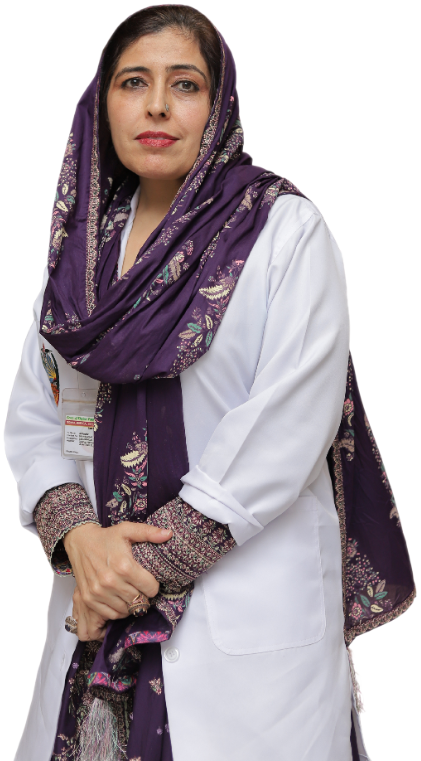
Prof. Dr. Muhammad Shafiq
DHQ Teaching Hospital, D. I. Khan, Khyber Pakhtunkhwa, Pakistan
Oversees clinical manuscript assessments, surgical sciences, case report integrity, and diagnostic studies. Directs double-blind peer review assignments, validates empirical clinical methodologies, and mentors student authors.

Prof. Dr. Samina Qadir
Gomal Medical College, D. I. Khan, Khyber Pakhtunkhwa, Pakistan
Directs institutional research verification, bioethics committee liaison, and epidemiologic study design. Oversees basic medical sciences submissions, biostatistical review standards, and faculty mentor engagement.
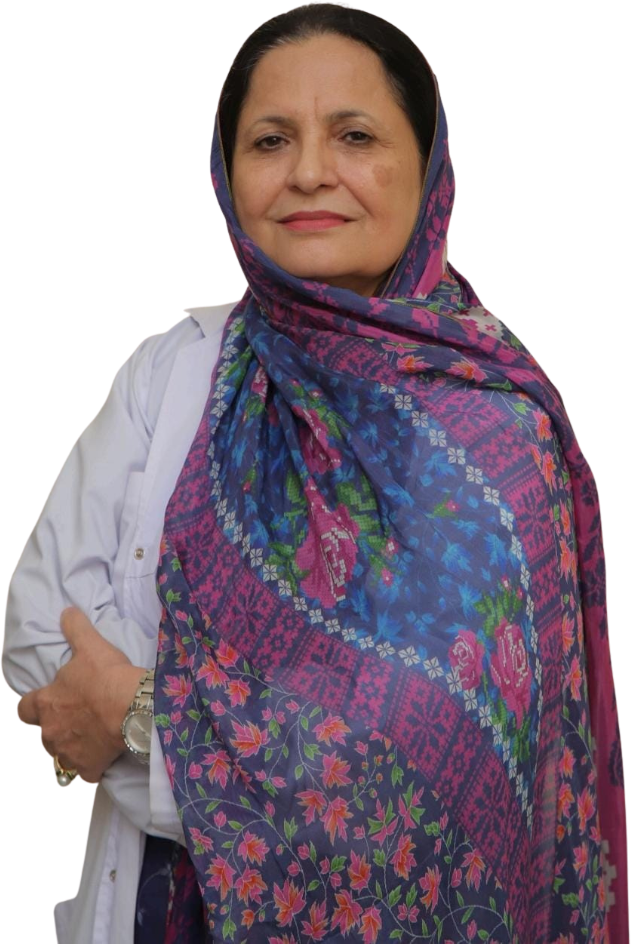
Ihtiram Ullah
Gomal Medical College, D. I. Khan, Khyber Pakhtunkhwa, Pakistan
Spearheads student editorial operations, manuscript onboarding, and peer-review workflows through Open Journal Systems (OJS). Coordinates author communication, student reviewer development, and leads the Student Research Society's publishing initiatives.

Editorial Board Members (National)
Distinguished medical faculty and student research society fellows driving manuscript vetting, double-blind peer review coordination, and academic outreach across Pakistan.
Aitezaz Hassan
Gomal Medical College
D. I. Khan, Pakistan
Noor Fatima
Gomal Medical College
D. I. Khan, Pakistan
Muhammad Younas
Gomal Medical College
D. I. Khan, Pakistan
Aman Iqbal
Gomal Medical College
D. I. Khan, Pakistan
Rahim Ullah
Gomal Medical College
D. I. Khan, Pakistan
Muhammad Sharjeel
Gomal Medical College
D. I. Khan, Pakistan
Abdul Basit
Gomal Medical College
D. I. Khan, Pakistan
Editorial Board Members (International)
Distinguished international researchers and clinical faculty bringing worldwide peer review expertise, methodological governance, and global scientific outreach to GSJMS.
Husna Irfan Thalib
Batterjee Medical College
Jeddah, Saudi Arabia
Muhammad Eisa Ali
University of Pavia
Pavia, Italy
Khayyam Haider
Brooklyn Hospital Center
New York, USA
Emile Cyubahiro
Gaziantep University
Gaziantep, Turkiye
Editorial Board Summary Table
Consolidated register of executive leadership, faculty managing editors, and student governance.
| Editorial Post | Member Name | Official Designation & Department | Official Email | Governance Focus |
|---|---|---|---|---|
| Patron in Chief |
Prof. Dr. Naseem Saba
Executive Patron
|
Dean / CEO Gomal Medical College, MTI, D. I. Khan | patroninchief@gsjms.com | Institutional oversight, medical education accreditation & strategic patronship. |
| Managing Editor |
Prof. Dr. Muhammad Shafiq
Faculty Managing Editor
|
Chairperson Orthopedic Department DHQ Teaching Hospital, D. I. Khan | managingeditorms@gsjms.com | Clinical manuscript reviews, surgical sciences & double-blind peer review integrity. |
| Managing Editor |
Prof. Dr. Samina Qadir
Faculty Managing Editor
|
Chairperson Research Cell Gomal Medical College, D. I. Khan | managingeditorsq@gsjms.com | Research Cell oversight, epidemiology, basic medical sciences & bioethics compliance. |
| Student Chief Editor |
Ihtiram Ullah
Chief Student Editor
|
President Student Research Society Gomal Medical College, D. I. Khan | chiefeditor@gsjms.com | Student editorial leadership, OJS platform management & author communications. |
| National Editorial Board Members (Pakistan) | ||||
| Editorial Board Member |
AH
Aitezaz Hassan
National Member
|
Gomal Medical College D. I. Khan, Pakistan | aitezazhassan@gsjms.com | Manuscript vetting, peer review coordination & student liaison. |
| Editorial Board Member |
NF
Noor Fatima
National Member
|
Gomal Medical College D. I. Khan, Pakistan | noorfatima@gsjms.com | Peer review management & clinical article evaluations. |
| Editorial Board Member |
MY
Muhammad Younas
National Member
|
Gomal Medical College D. I. Khan, Pakistan | muhammadyounas@gsjms.com | Literature verification & double-blind review tracking. |
| Editorial Board Member |
AI
Aman Iqbal
National Member
|
Gomal Medical College D. I. Khan, Pakistan | amaniqbal@gsjms.com | Clinical case report reviews & author correspondence. |
| Editorial Board Member |
RU
Rahim Ullah
National Member
|
Gomal Medical College D. I. Khan, Pakistan | rahimullah@gsjms.com | Research methodology & ethical clearance verification. |
| Editorial Board Member |
MS
Muhammad Sharjeel
National Member
|
Gomal Medical College D. I. Khan, Pakistan | muhammadsharjeel@gsjms.com | Epidemiologic study designs & biostatistical checks. |
| Editorial Board Member |
AB
Abdul Basit
National Member
|
Gomal Medical College D. I. Khan, Pakistan | abdulbasit@gsjms.com | Manuscript onboarding & OJS review tracking. |
| International Editorial Board Members | ||||
| International Member |
HT
Husna Irfan Thalib
Saudi Arabia
|
Batterjee Medical College Jeddah, Saudi Arabia | husnairfan@gsjms.com | Global peer review, clinical education & international research liaison. |
| International Member |
EA
Muhammad Eisa Ali
Italy
|
University of Pavia Pavia, Italy | eisaali@gsjms.com | European academic partnerships & biomedical study methodology. |
| International Member |
KH
Khayyam Haider
USA
|
Brooklyn Hospital Center New York, USA | Via Editorial Office | US hospital medicine, clinical protocols & quality assurance standards. |
| International Member |
EC
Emile Cyubahiro
Turkiye
|
Gaziantep University Gaziantep, Turkiye | emilecyubahiro@gsjms.com | International peer review, clinical collaborations & student research mentoring. |
Author Guidelines
Comprehensive criteria, ethical standards, empirical methodologies, and structural requirements for publication in the Gomal Student Journal of Medical Sciences (GSJMS).
4. Submission of Manuscripts & Originality
Only original material in the manuscript will be considered for publication. Neither the manuscript nor essential substance of the manuscript should be submitted for publication elsewhere before appearing in this journal.
5. Online Submission via Open Journal Systems (OJS)
PKP OJS 3.x IntegratedManuscript submissions, peer review, and editorial tracking for GSJMS are strictly managed through the Open Journal Systems (OJS) platform. On our portal, the corresponding author must create an account or log in to their existing OJS account. Once authenticated, authors complete the standardized 5-step OJS submission process: (1) Start & Submission Checklist, (2) Upload Blinded Submission Files, (3) Enter Metadata & MeSH Keywords, (4) Confirmation, and (5) Next Steps.
If required, supplementary files such as raw datasets, ethical approvals, and survey questionnaires can be uploaded alongside the main text into OJS.
6. Language
GSJMS is published in English. Use of British English is preferred; however, American English can also be employed where convenient. Consistency in spelling style throughout the manuscript is required.
7. General Typography & Layout Style
Please use Times New Roman, size 12, justified, with a line spacing of 1.0. Tables and illustrations (figure/chart/image) should be placed where specified, not at the conclusion of the document.
Submission Format According to the Type of Manuscript
Review Article
- Max 3500 words (excluding references)
- 35 references (minimum)
- Comprehensive literature synthesis
Original Article
- Max 2500 words (excluding abstract & refs)
- 250-word structured abstract
- 20 references (minimum)
- Full IMRAD architecture
Short Reports / Cases
- Max 1250 words (excluding title page)
- 150-word unstructured abstract
- Max 2 tables or figures
- 10 references (max)
- Max 6 authors allowed
8. Title Formulation & Medical Subject Headings (MeSH)
It must include the study's design, objectives, and variables. It should also include information about the characteristics and geographical location of the population of interest. Use of abbreviations should be avoided in the title.
9. Abbreviations
Only standard abbreviations should be used. For each abbreviation, the full term should be presented first, followed by the abbreviation in parenthesis. A well-known and widely used abbreviation may be used in this capacity.
10. Standards for Tables and Illustrations
- 1. Quantitative Demand: There is no limit to the number of tables and illustrations (graphs/ charts/ images) that can be included. These should be in accordance with the manuscript's rational demand.
- 2. Self-Contained / Stand-Alone: Each table and illustration should stand alone, displaying all of its contents/meanings without referring to the text.
- 3. Legends and Titles: Each table and illustration must have a legend below the table/illustration. The title of the table and picture should be a summary of the manuscript's title.
- 4. Quality: Illustrations must be of high quality. Graphs and charts should be editable.
- 5. Captions: Where applicable, a legend should be included with the table or illustration.
- 6. Attribution: If a table or illustration is taken from a published work, the source must be cited.
- 7. Permission: To reproduce a previously published illustration, the author must obtain permission from the author/publisher.
Basic Adjustments: Basic adjustments to brightness, contrast, or color balance are acceptable only if they do not alter or obscure original data. Submitted manuscripts may be screened using image forensics tools or specialized software to detect potential image irregularities.
Methodological Exception: The only exception is when AI or AI-assisted tools are an integral part of the research methodology—for example, in AI-assisted imaging used for data generation or interpretation in fields such as biomedical research. In such cases, the use of AI tools must be clearly and reproducibly described in the Methods section, including:
- How the AI tool was applied in image creation or modification;
- The name of the model or tool, its version and extension number, and the manufacturer;
- Confirmation of adherence to the AI software’s usage policies and proper attribution of generated content.
Raw Files Verification: Authors may be asked to provide original, unaltered images or raw composite files for editorial verification.
Graphical Abstracts & Cover Art: The use of generative AI or AI-assisted tools to produce graphical abstracts or other illustrative artwork is not permitted. Limited exceptions may apply to cover art, but only with prior approval from the journal editor and publisher, and if authors demonstrate that: (1) All necessary usage rights have been secured; and (2) Appropriate credit and attribution are provided.
11. Units of Measurements
Please use Systems International (SI) units, where possible (e.g. mg/dL, cm, kg, mm Hg). Standard metric prefixes should be adhered to.
12. Drug Names
Generic names of drugs are preferred. Where essential, the proprietary / brand names can be given in parenthesis following the generic chemical designation.
Structured Abstract (Max 250 words)
Word count should be within 250 words (it may be up to 350 in exceptional cases). It must have the following four sub-headings:
A INTRODUCTION: Scientific Context & Global-to-Local Funnel
This section should have nearly all the following components. Bring here data in quantities (numbers & figures) regarding all your variables of interest as per your objectives. It may include prevalence and/or incidence of the disease of interest/ under investigation, its distribution by socio-demographic factors, its various determinants or its treatment.
Instead of prevalence, distribution, determinant and treatment of a disease, the researcher may determine any health related event in a population, like level/ concentration/ score of some anthropometric measure/ biochemical parameter, like weight, height, blood pressure (BP), random blood sugar (RBS) etc. Here bring the level/ concentration/ score of your parameters of interest.
The manuscript should clearly state: research problem, knowledge gap, research question, research objective, hypothesis, and significance of the study.
B MATERIALS AND METHODS: Methodological Rigor & Data Architecture
This section must rigorously include all the following six components:
Please mention the study design (cross-sectional / case-control / cohort / trial) with name of the academic/ professional department and name of the academic/ professional institution with city and country (demonstrating ownership). Add duration of the study with day, month and year.
Technical approval from the Institutional Research Board (IRB), ethical approval from the Institutional Ethical Committee, and documented informed patients' / participants' consent.
“Research is a problem-solving activity for a specified population; never for a sample.”
Please specify/ define your population by count, geographic location, socio-demographic, and disease factors. Then describe how you calculated the sample size as required by the design of your study with formula/calculation or online calculator/software with reference/link. Then specify the sampling technique. Give inclusion and exclusion criteria for one group or separately for each group in case of two or more groups.
Narrate all steps taken from enrolment of a subject to discharge from the study, including history, general & systemic examination, investigations, and any intervention (health education, food, exercise, vaccine, drug, device, laser or surgery). Provide details of equipment, instruments, appliances and tools used, citing name, model, version, company name, and manufacturing city in parenthesis.
- Literature survey: Secondary data collected by other researchers, mostly qualitative.
- Questionnaire: Structured queries administered to subjects.
- Interview: In-person or oral responses.
- Observation: Clinical examination, laboratory & imaging tests, pre/per/post drug-treatment/device-procedure/operation notes/findings as morbidities, disabilities, mortalities (giving primary first-hand quantitative data). State which methods were utilized.
Questionnaire is framed from literature to transform qualities into quantities (e.g. Knowledge, Attitude & Practice Surveys). Its reliability must be pretested by a pilot study and reported as Cronbach’s alpha. It should be based on a 5-point Likert scale, with a range of 1-5 scores (1 = strongly disagree, 2 = disagree, 3 = neutral, 4 = agree, 5 = strongly agree) respectively. It includes respondent demographics. The questionnaire must not be on nominal or ordinal scale.
- • Items (questions) extracted from existing literature
- • Designed as per list of variables & theoretical framework
- • Items should be short, concise, and to the point
- • Double-barrel questions
- • Putting words in mouth of respondent (leading Qs)
- • Memory-dependent questions (use cash memory)
- • Emotionally loaded Qs (anger, fear, hatred, happiness)
- • Personal/private culturally sensitive questions
- • Technical jargons
- • Too many questions or overly long questionnaires
- • Negative questions (if used, reverse scoring at analysis)
Demographic variables: gender, age in years, age groups, education level, residence, experience, income etc.
Research variables: pain in flank, category of pain in throat, level of knowledge/attitude/practice, weight in Kg, height in cm, volume in ml, RBS in mg/dL, T3 level in pcg/ml.
Attributes of Categorical Variables: Age grouping (e.g. Group 1 up to 50 yrs, Group 2 >50 yrs); Residence (urban, rural); Education (matric=1, graduation=2, masters=3, MPhil=4, PhD=5); KAP Likert sum scores.
Variable Roles: Identify independent, dependent, confounding and matching variables.
Data Types: Nominal (gender, residence, pain in flank); Ordinal (age groups, education levels, category of pain in throat); Interval / Ratio / Continuous (age in years, KAP Likert scores, VAPS pain score, weight in kg, height in cm, RBS in mg/dL, T3 in pcg/ml).
Attachments & Tools: Attach proforma and questionnaire if any. Mention calculator or software used for data analysis.
Research is for a specified population; never for a sample. It is ideal to observe the entire population, but not feasible. Statistics helps collect data for a sample, analyze it for the sample (descriptive statistics) and infer it onto the population from which it was drawn (inferential statistics: parameter estimation and hypothesis testing).
Describes the sample alone. Categorical data (nominal/ordinal) analyzed by count and percentage.
Numeric data (interval/ratio) is subjected to normality tests (Skewness, Kurtosis, Kolmogorov-Smirnov test & Histogram). If normal: Mean, SD, minimum, maximum, range. If skewed: Median, Q1, Q3, and IQR (Q3 - Q1).
Data for sample inferred onto population.
Estimation of Parameters: Construct 95% Confidence Intervals around mean or proportion (e.g., Mean RBS was 110 [95% CL, 105.5-114.5] mg/dL; DM frequency was 45 [15%, 95% CL, 12.5-17.5%]).
Hypothesis Testing: Parametric and non-parametric tests applied with exact p-values.
C RESULTS: 12-Step Empirical Reporting Protocol
D DISCUSSION: 8 Comparative Rules
- Put your findings for your first objective/variable. Add studies with similar findings from local, then national, regional, and global studies/literature. Then add studies with higher findings and lastly lower findings. Proceed variable by variable.
- The comparison is to be based on estimation of parameters (indices of population), not merely sample statistics. Further, it should be based on hypothesis testing.
- Comparisons must be grounded in numerical indices (counts, percentages, means) from populations, not merely philosophical arguments.
- Each comparison study must cite author name, city & country, duration, sample size, and relevant data.
- Prioritize studies already cited in the Introduction.
- Bring only relevant data matching your objectives/variables.
- Conclusion of Discussion: Summarize your results in simple non-statistical English. Do not import conclusions from other authors.
- Recommendations: May be added as a separate heading or final paragraph. Here you may go beyond your own findings.
E CONCLUSION
It should be strictly based on the objective and principal findings. False, ambiguous conclusions and speculations must be scrupulously avoided.
F REFERENCES: Vancouver Referencing Standard
- 1. Vancouver Style: Vancouver referencing style must be strictly followed.
- 2. Serial Citation: References should be numbered serially and cited in digits within the text.
- 3. Author Naming: Last/family/surname in full, then capital initials of 1st and 2nd names with no gap. List up to six authors; for more than six authors, append et al.
- 4. Journal Titles: Journal titles should be written in full form followed by the issue and volume number.
- 5. Digital Identifiers: Add DOI where available; otherwise add valid online link.
Copyright Notice (CC-BY 4.0)
This is an open-access journal and all the published articles / items are distributed under the terms of the Creative Commons Attribution License (CC-BY 4.0), which permits unrestricted use, distribution, and reproduction in any medium, provided the original author and source are credited.
For editorial comments or licensing queries: chiefeditor@gsjms.com
Privacy Statement
The names and email addresses entered in this journal site will be used exclusively for the stated purposes of this journal and will not be made available for any other purpose or to any other party.
Ready to Submit Your Blinded Manuscript?
Ensure all ICMJE authorship requirements, Vancouver referencing, and double-blinding conditions are fulfilled before beginning online submission.
Journal Policies
Commitment to research integrity, ethical standards, artificial intelligence transparency, and open-access dissemination.
AI & Image Manipulation
Basic adjustments (brightness, contrast, cropping) are acceptable solely if they do not obscure or distort authentic primary data. Manuscripts may be subjected to forensic image analysis algorithms during technical screening.
Methodological AI Exception: AI models may only be utilized if they constitute an intrinsic component of the research inquiry (e.g. machine learning algorithm for imaging categorization). Such methods must be fully documented in the Methods section.
Open Access & Licensing
GSJMS is a diamond open-access publication. All articles are distributed under the terms of the Creative Commons Attribution License (CC-BY 4.0).
No Article Processing Charges (APC): In keeping with our undergraduate mission, no submission or publication fees are levied upon student authors.
Peer Review & Editorial Integrity
Every manuscript undergoes rigorous double-blind peer review by at least two independent expert reviewers (including senior faculty referees and trained student editors).
Editorial decisions are based exclusively on scientific merit, originality, methodological rigor, and academic clarity, free from institutional or commercial conflicts of interest.
Ethical Approvals & Privacy
All studies involving human participants must have documented approval from a recognized Institutional Review Board (IRB) or Ethics Committee, complying with the Declaration of Helsinki.
Privacy Policy: Author and reviewer contact details registered in this portal will be utilized solely for official correspondence related to journal operations and will never be shared with third parties.
Questions Concerning Policies?
Contact the Chief Editor and Editorial Office for ethical inquiries.
chiefeditor@gsjms.comOJS Submission Portal
All manuscript submissions, double-blind peer review, and editorial communications for GSJMS are securely processed and tracked through Open Journal Systems (OJS).
PKP Open Journal Systems Workflow
Standardized double-blind review, real-time tracking, Crossref DOI indexing, and automated reviewer allocation.
Corresponding Author Login (OJS Portal)
New Author?
Register your OJS author account to submit and track your manuscripts.
Create New Author Profile
Submission Preparation Checklist (OJS Requirements)
As part of the submission process, authors are required to check off their submission's compliance with each item.
Manuscript Details & Abstract
Provide exactly 7 keywords according to Medical Subject Headings (MeSH) terminology for medical indexation.
Original articles must include structured subheadings: Background, Objectives, Methods, Results, and Conclusion.
Upload Submission Documents
Please provide all 4 required files in accordance with double-blind peer review policies.
1. Blinded Manuscript *
Word / PDFMain body without author names, departments, or institutions.
2. Ethical Approval (Signed) *
IRB / ERCDuly signed & stamped ethical clearance certificate from institutional board.
3. Survey / Instrument *
Tool / ProformaQuestionnaire, clinical proforma, interview schedule or data tool.
4. Author Details Document *
Title PageComplete author names, designations, institutions, ORCID iDs, and contacts.
- Blinded Manuscript: Stripped of all author and institutional identities to guarantee double-blind peer review.
- Ethics Approval: Verified against institutional research oversight registers.
- Survey Tool & Author Document: Kept confidential in editorial metadata to maintain reviewer blinding.
Author Metadata & Contribution Order
Provide full academic details for each co-author. Maximum 12 authors allowed.
Review & Submit to OJS
Manuscript Successfully Submitted!
Your manuscript, signed ethical certificate, survey tool, and author metadata have been registered in Open Journal Systems (OJS 3.x).
Official Submission Acknowledgment Email Dispatched
A formal confirmation letter featuring the official GSJMS Logo and OJS tracking credentials has been dispatched to:
Gomal Student Journal of Medical Sciences
Official Open-Access Medical Journal • Gomal Medical College & SRS
Dear Author,
Thank you for submitting your research work to the Gomal Student Journal of Medical Sciences (GSJMS). We are pleased to confirm that your manuscript, along with your signed ethical approval certificate, survey instrument, and author details document, has been successfully received and cataloged in our Open Journal Systems (OJS 3.x) editorial database.
Indexed MeSH Keywords (7):
Submitted Abstract Summary:
272 WordsVerified Submission Documents:
- Blinded Manuscript: manuscript_blinded.docx
- Signed Ethical Approval: IRB_Approval_Signed.pdf
- Survey Instrument: Survey_Tool.pdf
- Author Details Document: Authors_TitlePage.docx
Authorship & Contribution Sequence:
In accordance with ICMJE guidelines, author sequence is registered strictly by contribution to research work. A copy of this confirmation has been delivered to all authors' emails.
Editorial Roadmap & Review Timeline:
With warm regards,
Editorial Office
Gomal Student Journal of Medical Sciences (GSJMS)
Gomal Medical College, MTI & Student Research Society
D. I. Khan, Khyber Pakhtunkhwa, Pakistan • chiefeditor@gsjms.com